Research across environments
Research in Antarctica is shaped by distance, danger, cost, and the challenge of access. Scientists must choose carefully where, when, and how research is carried out.
Much of what we know about Antarctica’s environment has been built expedition by expedition. Each voyage, field season, and instrument deployment adds another piece to a much larger scientific picture.
Research in the Antarctic and Southern Ocean takes place in three main settings:
- At Sea: aboard research vessels operating across the Southern Ocean and Antarctic continental shelf.
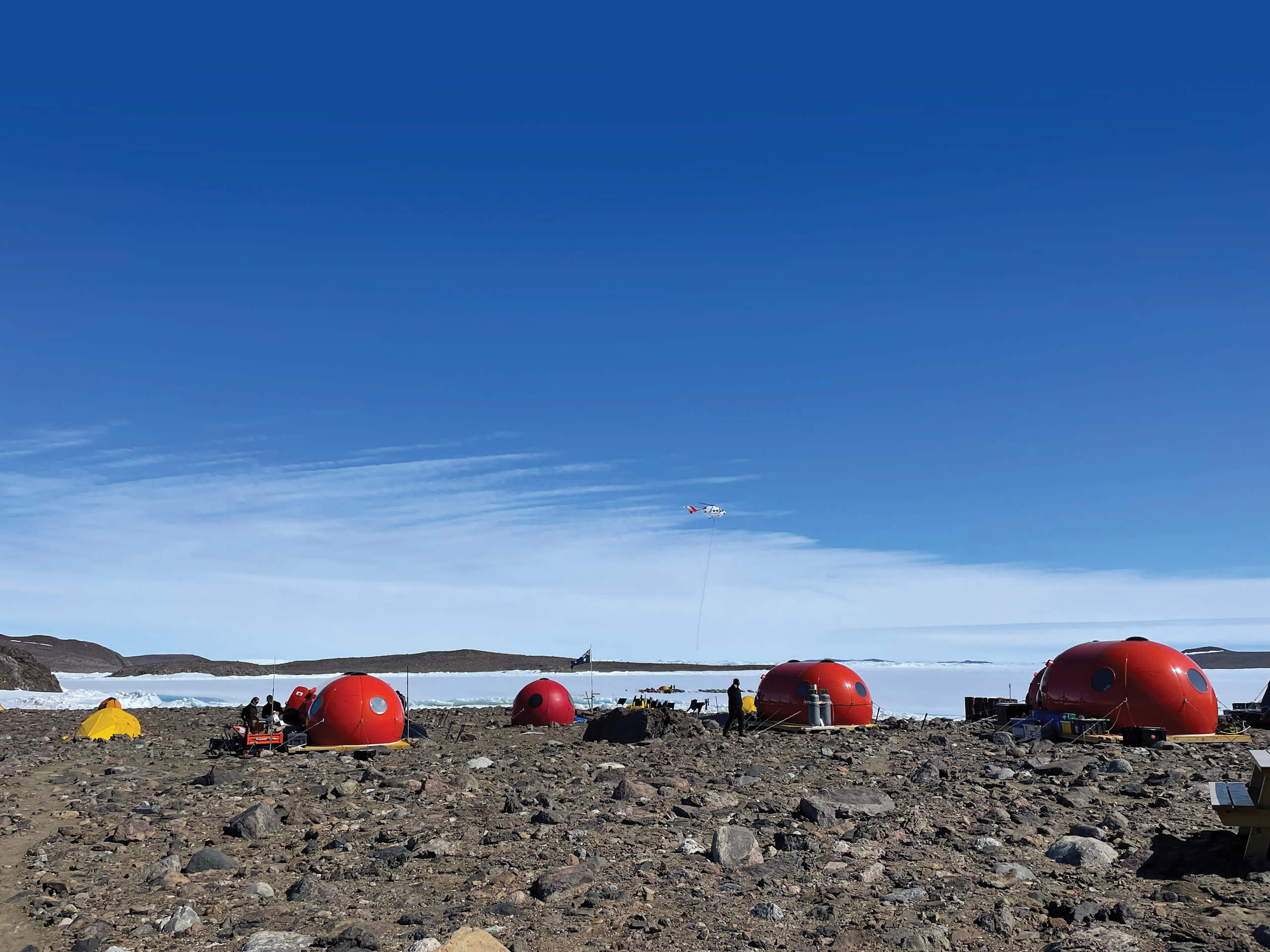
- On the Ice: where scientists study glaciers, ice shelves and coastal ecosystems.
- Under the Ice: where hidden ocean systems interface with floating ice shelves and the seafloor below.
Each presents its own challenges, and each depends on specialised technology, logistics, and expertise. Together, these research efforts generate the data that underpin Seamap Antarctica, revealing the structure of the seafloor, the circulation of the Southern Ocean, and the ecosystems they support across space and time.
Explore how scientists study the Antarctic environment.
CHOOSE YOUR PATH
Research on the ice
Field research on Antarctica’s glaciers, ice shelves and coasts, working in extreme conditions at the surface of the frozen continent.
Research under the ice
Beneath Antarctica’s floating ice shelves, where specialised technologies reveal environments far beyond direct human reach.
Research at sea
Ship-based research across the Southern Ocean, mapping the seafloor, tracing ocean circulation, and tracking marine life across the wider Antarctic system.