Fly South

Flying to Antarctica

For many researchers, the journey to Antarctica begins with a long flight south across the Southern Ocean.

Aircraft carry the people, equipment and supplies needed to support research stations, while providing rapid access to the continent during the short summer season.

Flights depart from countries such as Australia, New Zealand, South Africa and South America, crossing vast distances to remote Antarctic airfields. Although much faster than travelling by ship, these journeys involve few alternate landing options, and operate in conditions that can change rapidly.

After hours of dark open ocean below, Antarctica comes into view as a broad white coastline of ice, glacier surfaces and mountain ranges extending toward the horizon.

Aircraft Designed for Polar Conditions

Aircraft used to fly to Antarctica must be able to cover long distances without refuelling, operate in extreme cold, and arrive at remote airfields with little supporting infrastructure.

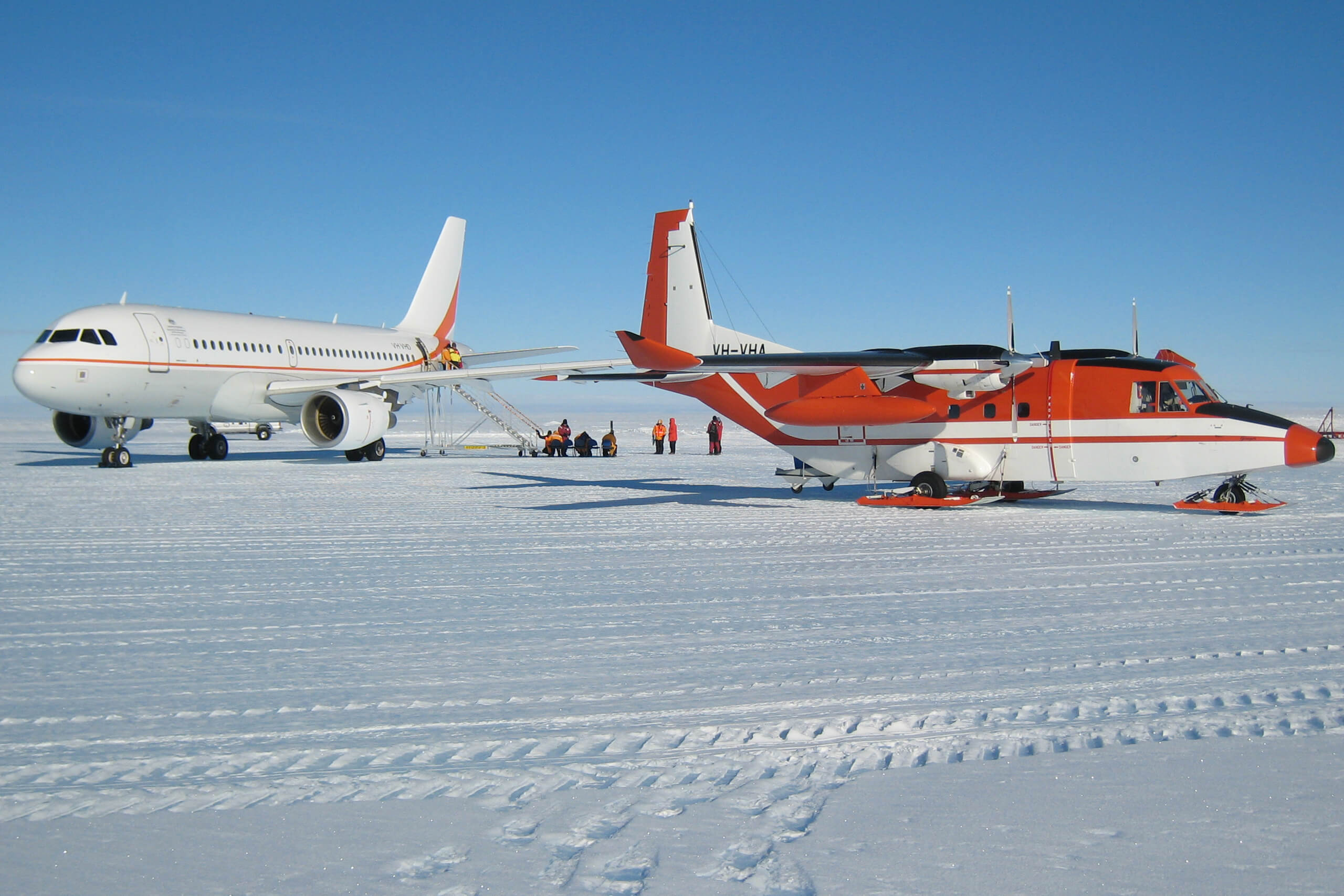
Fuel, payload, and operating parameters must be carefully balanced before each departure. Many aircraft used in Antarctica are built to operate independently from normal airport infrastructure. Integrated air stairs and other self-contained systems allow passengers and cargo to be unloaded without reliance on conventional ground equipment.

These long-distance flights are typically carried out by large, wheeled aircraft landing on specially prepared frozen runways. In some cases, expeditioners may continue onward within Antarctica by smaller ski-equipped aircraft.

Weather, Navigation, and the Point of No Return

Flights to Antarctica are among the most logistically demanding in aviation.

As aircraft approach the pole, magnetic compasses become less reliable, and pilots rely on satellite-based systems and specialised polar navigation systems to maintain accurate positioning.

Landing on the ice can be challenging when visibility is poor. In whiteout conditions, the sky and snow-covered ground blend into a field of white, erasing the horizon and making the final moments before touchdown especially difficult for pilots to judge.

Landing on the Frozen Continent

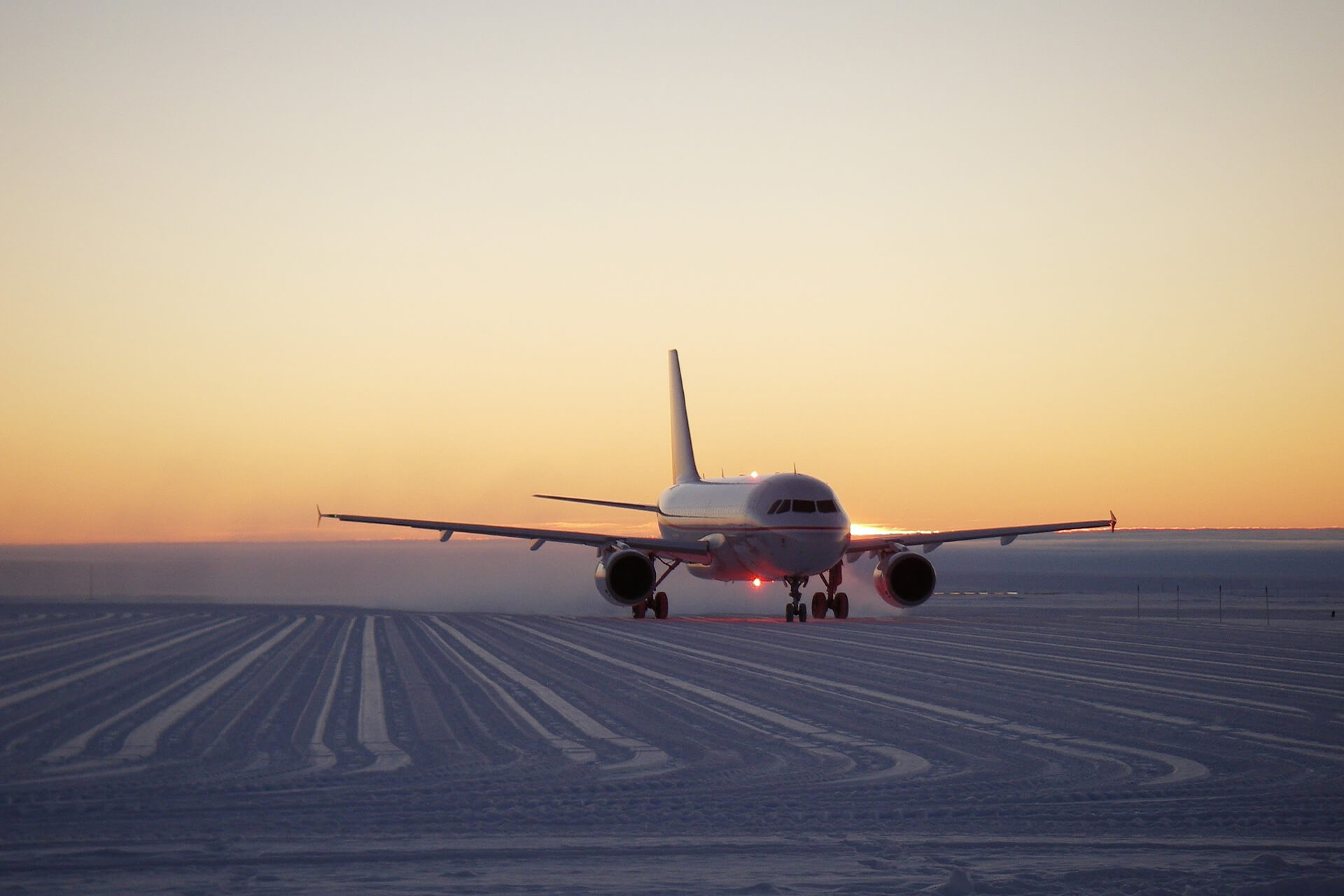
Unlike most aviation operations, aircraft in Antarctica land on specially prepared runways made from glacial ice, sea ice, or compacted snow.

Before descent, passengers may be required to change into full cold-weather survival clothing and carry emergency supplies in case landing is delayed or conditions on the ground deteriorate.

Surface integrity

The runway is carefully monitored to ensure the surface is strong enough to support the aircraft’s weight, while also providing sufficient friction for braking and steering. In the height of summer, warmer conditions can weaken the surface enough to force temporary runway closures. Between flights, the frozen airstrip requires ongoing preparation and maintenance to clear snow and restore safe surface conditions.

A difficult horizon

Landing on the ice can be challenging when visibility is poor. In whiteout conditions, the sky and snow-covered ground blend into a field of white, erasing the horizon and making the final moments before touchdown especially difficult for pilots to judge.

Ground Operations on the Ice

Touchdown in Antarctica is unlike landing at a conventional airport.

Moving quickly

Passengers, cargo and scientific equipment are unloaded quickly onto exposed ice airfields with limited ground crews, infrastructure, and emergency support. Aircraft may remain running during unloading to reduce the risk of restart problems in extreme cold. In such a remote setting, a grounded aircraft is exceptionally difficult to repair, with limited engineering support, spare parts and recovery options.

While flight operations are carefully timed for favourable weather windows, a grounded aircraft is at serious risk on Antarctic ice airfields. Katabatic winds, formed by dense, freezing air draining downslope from the high Antarctic plateau, accelerate rapidly as they move toward the coast. If left unsecured on the ice, an aircraft can quickly be damaged by these powerful winds.

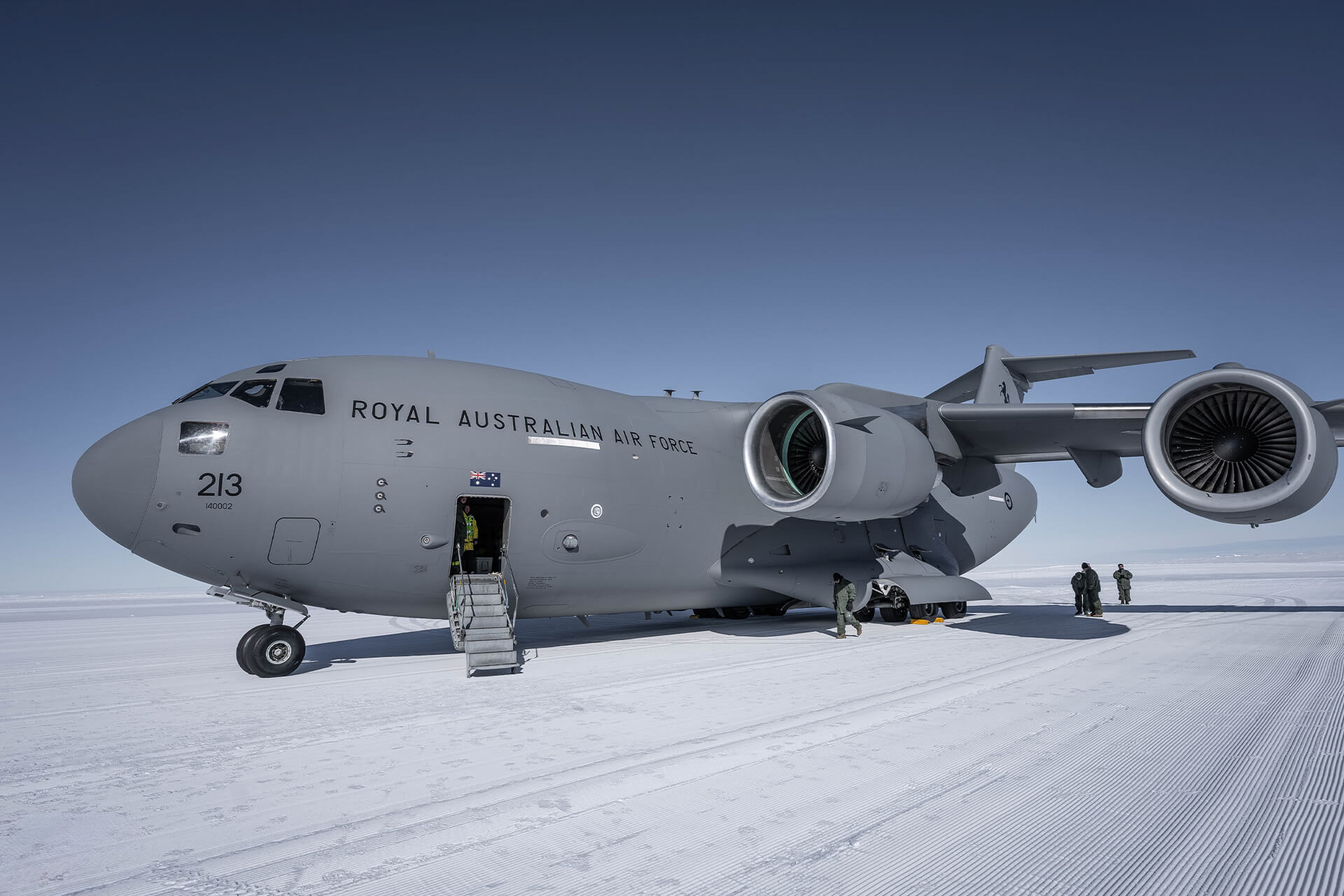
Once off the aircraft, people and cargo are transferred by specialist ground vehicles to stations, camps or logistics hubs elsewhere on the ice. The runway may be some distance the station itself, and landing is only the first stage of the journey inland.

A Seasonal Flight Window

Most flights to Antarctica take place during the Antarctic summer, when long daylight hours, better visibility and operating conditions are more suitable for aviation. 

Even then, operations are highly dependent on weather and surface conditions, and some airfields may close temporarily if warming or poor weather affects the runway. In winter, darkness, severe weather and extreme cold make flight operations much more challenging. Many Antarctic airfields close outside the summer season, cutting off one of the continent’s most direct links to the outside world.

CONTINUE YOUR PATH

After Landing

After arriving in Antarctica, scientists typically continue on to a research station, where equipment is organised and fieldwork begins to take shape.

From these bases, teams prepare for travel into the surrounding Antarctic landscape.