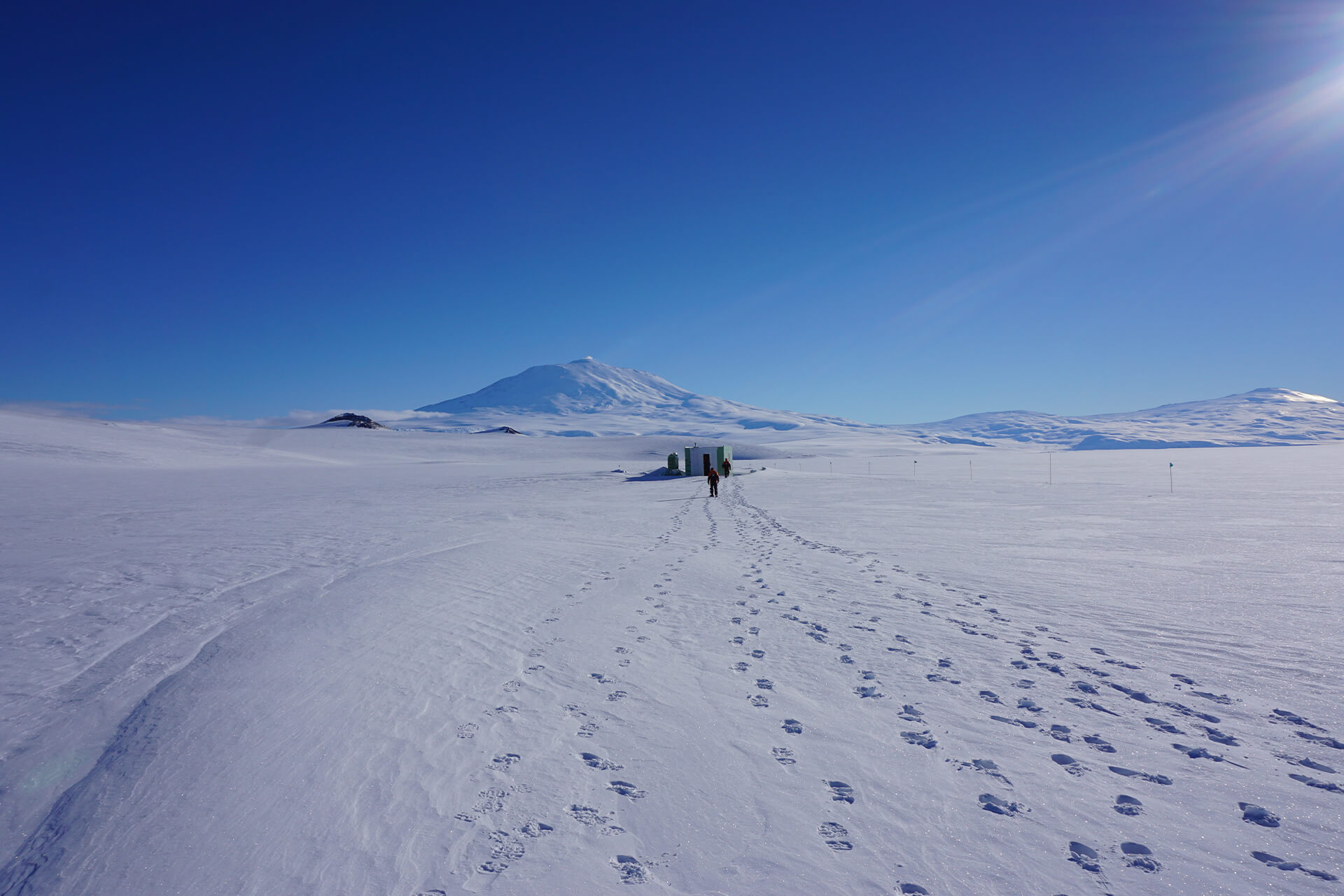
Although a field camp is temporary, it still needs the basic systems required to support life and work in isolation.
Sleeping shelters, a communal space for cooking and eating, communications equipment, safety gear and some form of power are essential to create a safe living and working environment. Together, they turn a small cluster of tents or huts into a functioning base.
Reliable communication is essential for teams working far from station support. Satellite phones and radio systems keep camps in contact with stations or vessels. Regular check-ins help ensure teams are safe and that plans can be adjusted quickly if conditions change.
Power is provided by portable fuel generators, or by solar panels during the Antarctic summer when daylight is continuous. Fuel and energy are carefully managed, as resupply in the field can be difficult and sometimes impossible.