Despite its extreme conditions, the Antarctic ocean supports a remarkable and highly specialised web of life. Cold temperatures, seasonal sea ice and strong ocean currents shape ecosystems across the Southern Ocean. This is a marine ecosystem built on adaptation, where life from plankton to whales persists under darkness and intense seasonality.
The structure of the seafloor and the circulation of ocean waters shape Antarctic marine ecosystems. Together, they influence where species can live, where food and nutrients accumulate, and where dense communities of sponges, corals and other invertebrates can thrive across the continental shelf and slope.
Much of Antarctica’s marine environment remains difficult to access, and many ecosystems are still poorly understood. As scientists explore deeper waters and hidden environments beneath ice shelves, new discoveries continue to emerge.
By bringing together observations from many research programs, Seamap Antarctica helps reveal how these ecosystems are structured, how they are connected, and how they may respond to environmental change.
Life in Antarctica is shaped by extremes.
Seawater temperatures hover close to freezing, while light levels shift dramatically between the long darkness of winter and the near-constant daylight of summer. Sea ice expands and retreats across vast areas of the ocean each year. For the animals and plants that live here, survival depends on remarkable adaptation.
Antarctic species have evolved specialised ways to cope with these harsh conditions. Some fish produce natural antifreeze proteins that stop ice crystals forming in their blood and tissues. Many species grow slowly, mature late, and can live for decades in the cold, stable waters. Other animals have adapted to seasonal pulses of food, making the most of the short summer period when sunlight fuels blooms of microscopic algae and plankton.
These conditions shape life across the Southern Ocean, influencing where species can live, how quickly they grow, and how food webs function from the seafloor to the sea ice edge. Despite its icy appearance, Antarctica supports a rich and distinctive web of life, shaped by long isolation and evolution in one of the most unusual environments on Earth.
Ocean circulation plays a powerful role in shaping life around Antarctica.
Currents move heat, nutrients, sea ice and tiny drifting organisms across vast distances, helping determine where species can live and how habitats are connected. Cold, dense water formed near the continent sinks and flows into the deep ocean, while currents around the Antarctic margin transport food and larvae between habitats. These moving waters influence everything from plankton blooms near the surface to the distribution of animals on the seafloor.
Around Antarctica, circulation can both link habitats and separate them. In some places, strong water movement brings nutrient-rich water to the surface, supporting highly productive food webs. In others, currents isolate populations over long periods, contributing to the evolutionary uniqueness of Antarctic marine life.
These patterns of water movement are fundamental to how Antarctic ecosystems function. They help explain why some areas support dense biological communities, why others remain relatively sparse, and how changes in sea ice or ocean conditions can ripple through the wider ecosystem.
Some of the smallest organisms in Antarctica play the biggest role in sustaining life in the Southern Ocean.
As sunlight returns in spring and summer, microscopic phytoplankton bloom in surface waters. At the same time, algae proliferate within and beneath sea ice.
Together, these organisms form the foundation of the Antarctic marine food web. They fuel a tightly connected system that supports everything from krill and fish to seals, seabirds and whales, linking seasonal pulses of light to life across the wider ecosystem.
Some of Antarctica’s most unusual and least visible ecosystems exist beneath sea ice and floating ice shelves.
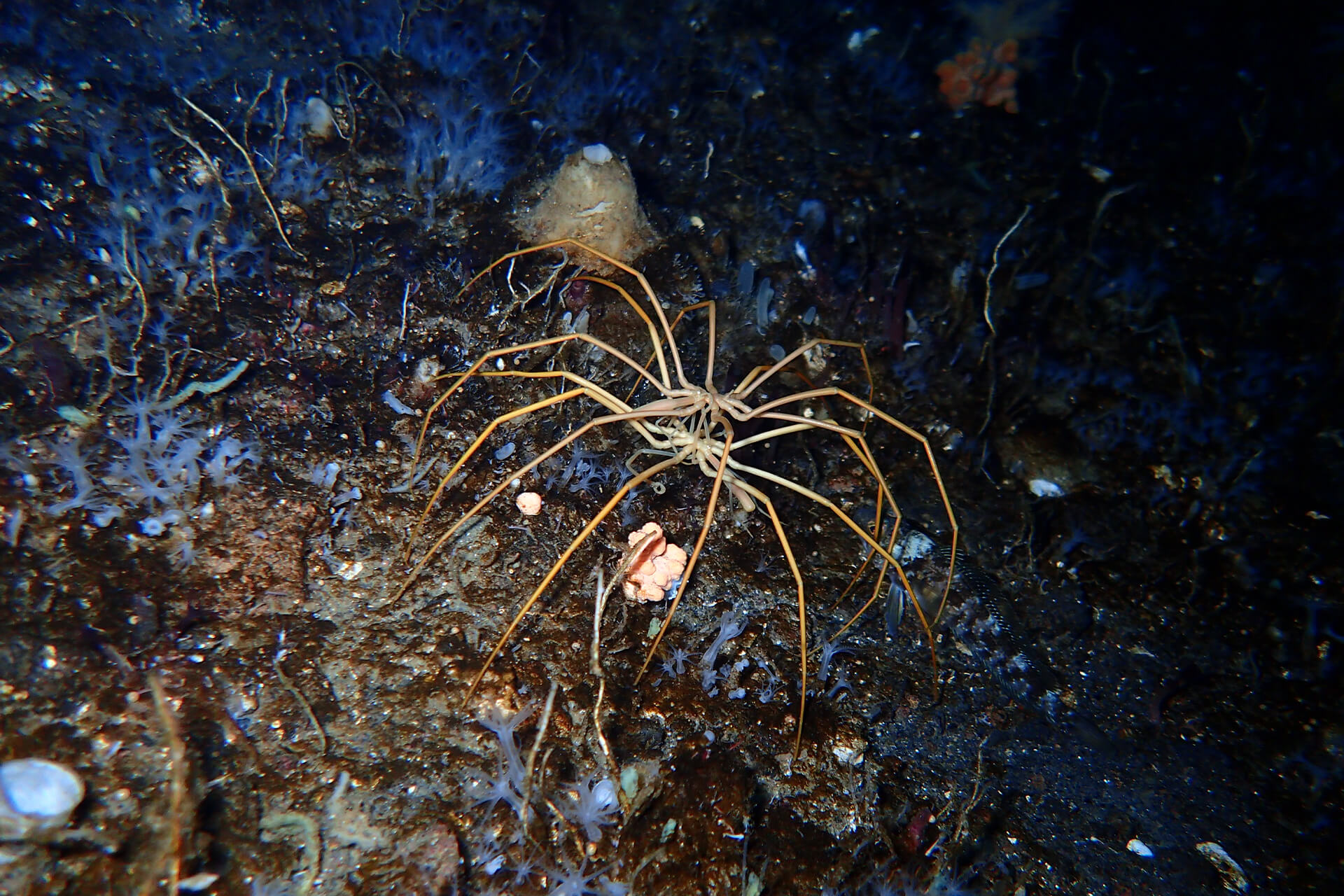
These hidden environments are cold, dark and often isolated from direct sunlight for long periods, yet they support a surprising diversity of life. In places once thought too extreme to sustain complex ecosystems, scientists have discovered seafloor communities of sponges, starfish, crustaceans, worms and other invertebrates living far beneath the ice.
Life in these environments depends on organic matter transported by ocean currents from more productive waters. The animals that live here are often slow-growing and highly adapted to stable but extreme conditions, making them highly vulnerable to disturbance.
Much of this world is difficult to reach and is poorly understood. Access often requires specialised drilling, remotely operated vehicles or under-ice cameras, and each expedition has the potential to reveal new species and ecological relationships that are still unknown to science.
The underside of sea ice is more than a frozen boundary. It is a living surface.
Algae grow within and beneath the sea ice where sunlight can still penetrate. In early spring, before open-water phytoplankton bloom begins, they provide one of the first food sources available in the Antarctic marine environment.
Antarctic krill graze directly on under-ice algae, making sea ice function like an upside-down pasture. Juvenile krill spend long periods feeding beneath sea ice, where it also provides shelter from predators. For this reason, changes in sea ice conditions can have far-reaching effects across the wider ecosystem.
Energy captured by microscopic plants flows through the Antarctic ecosystem in intricate and highly connected food webs.
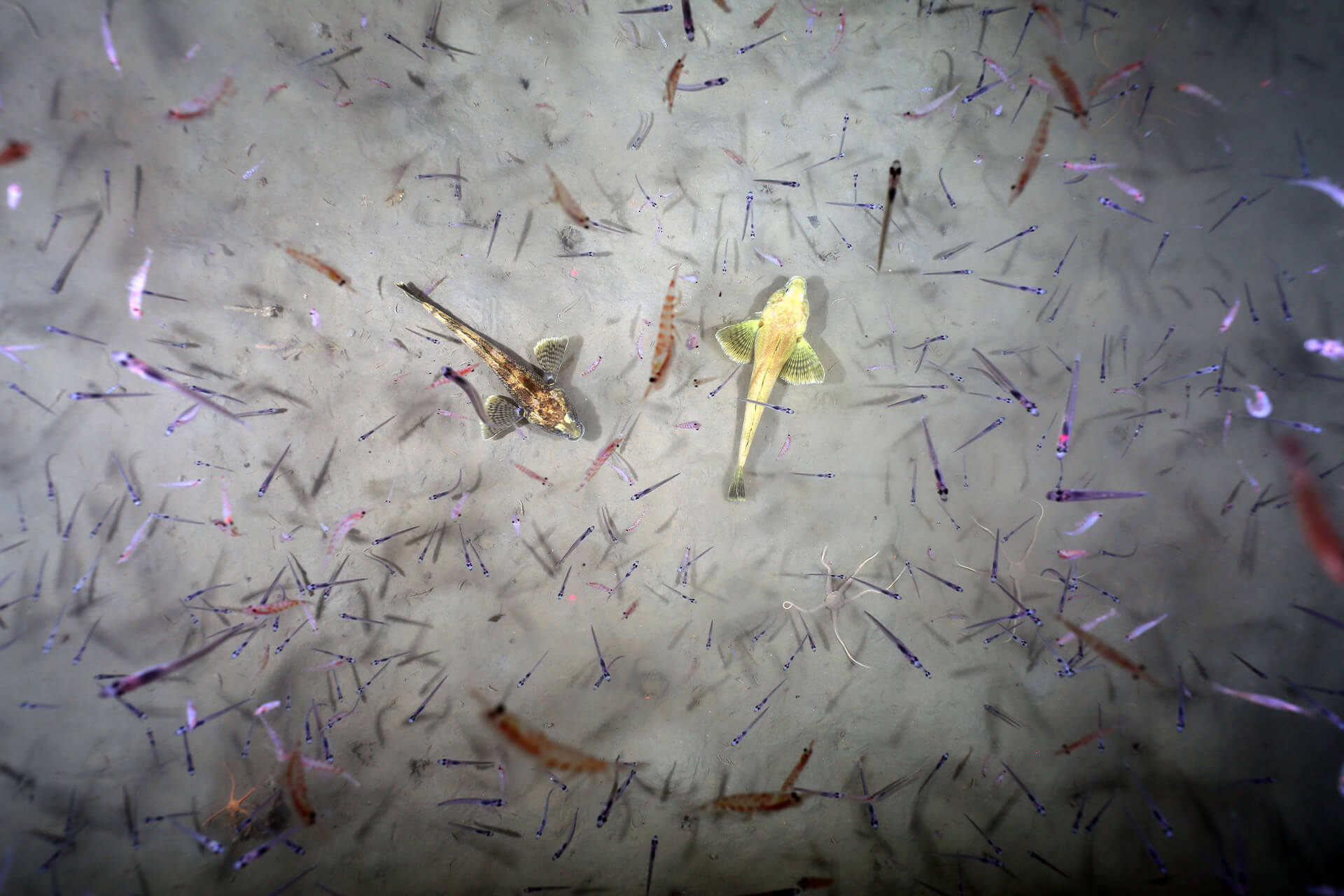
At the centre of this system are Antarctic krill—small crustaceans that convert sunlight into food for large Antarctic predators. A single swarm of can contain millions of individuals, creating dense patches of food that attract planktivores and predators from across the ocean.
Because so many animals depend on krill, even small environmental changes can ripple through the wider ecosystem. Shifts in sea ice, ocean circulation or primary productivity can alter when and where food is available, affecting species across multiple levels of the food web.
Much of Antarctica’s continental shelf supports rich communities of animals living on the seafloor.
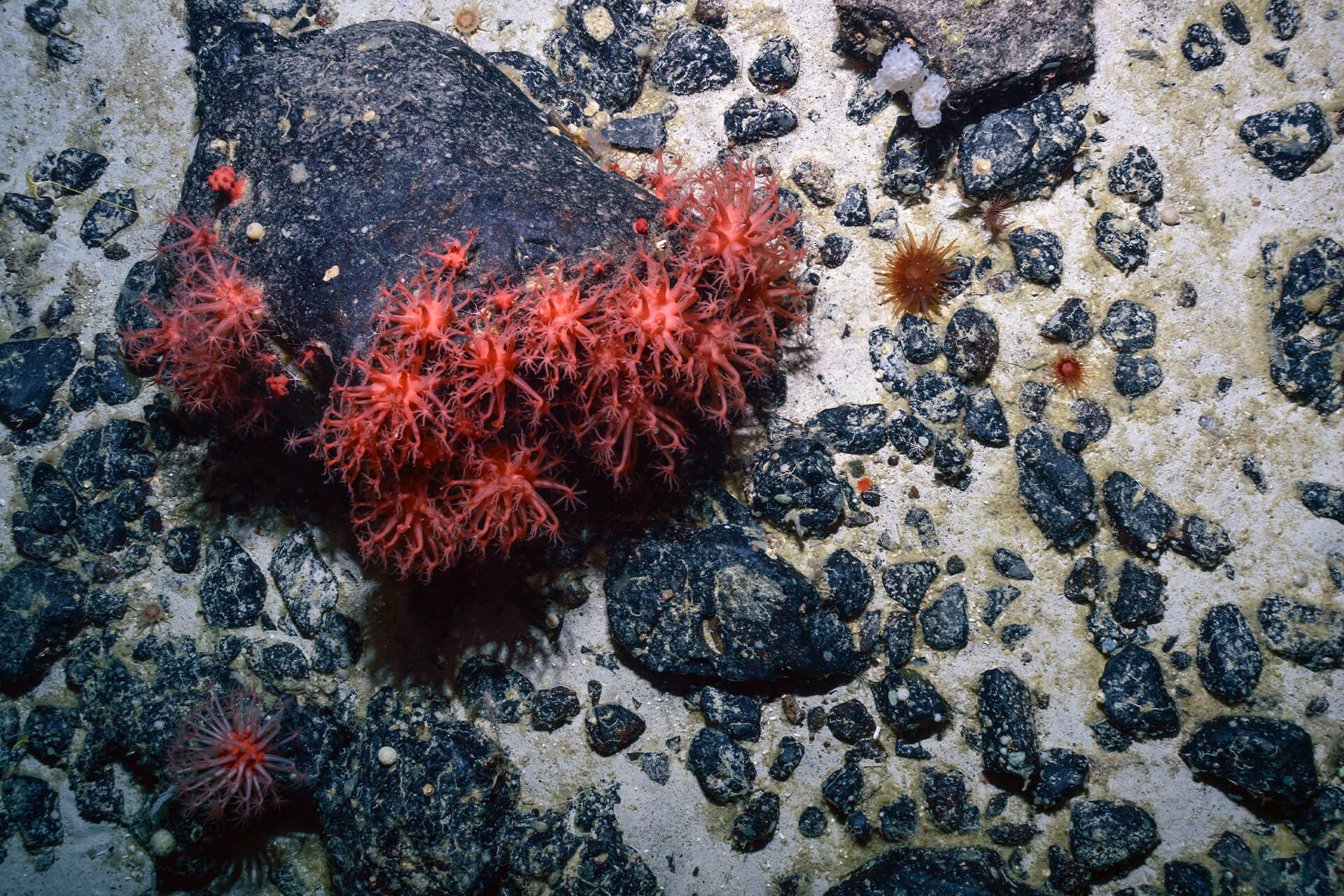
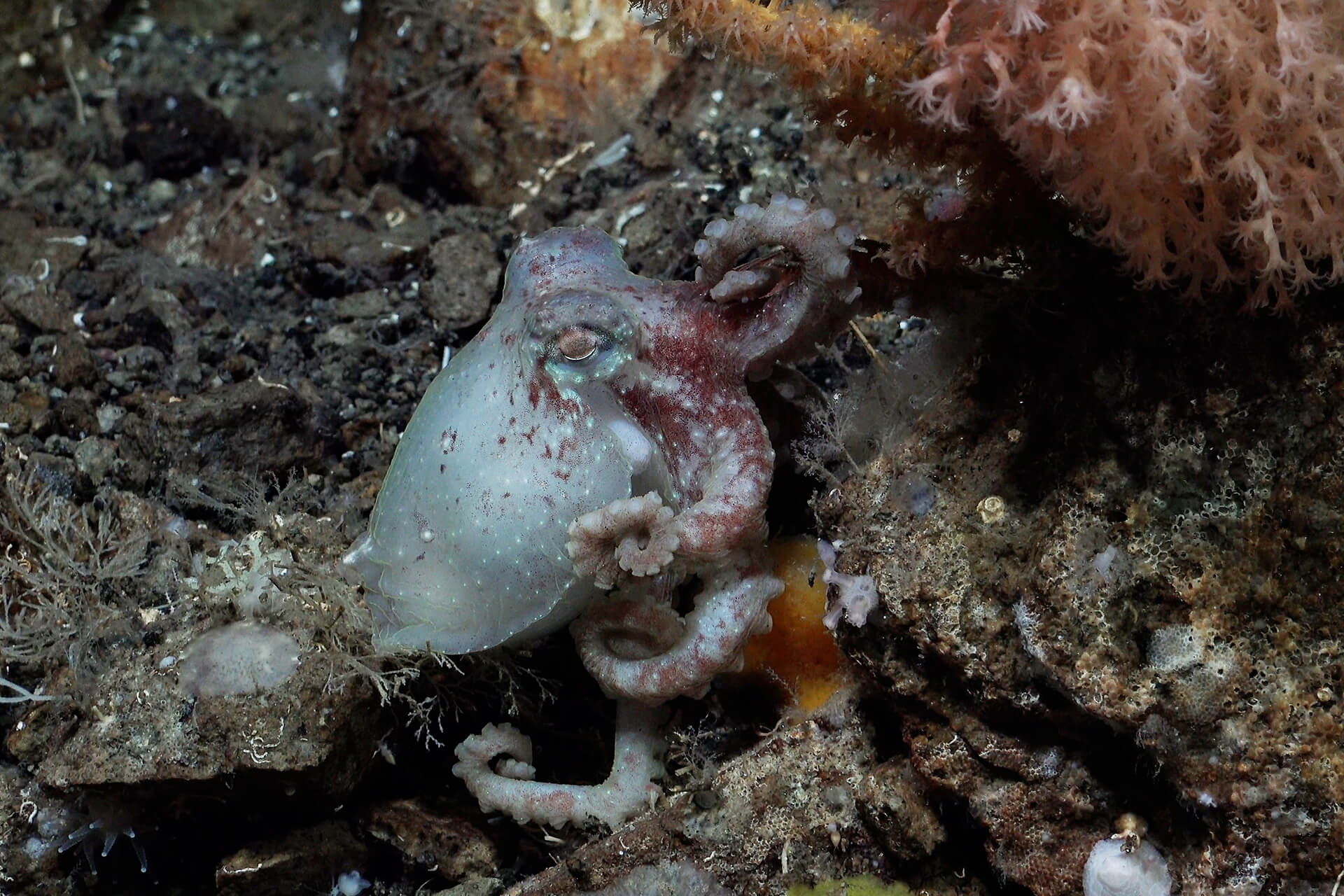
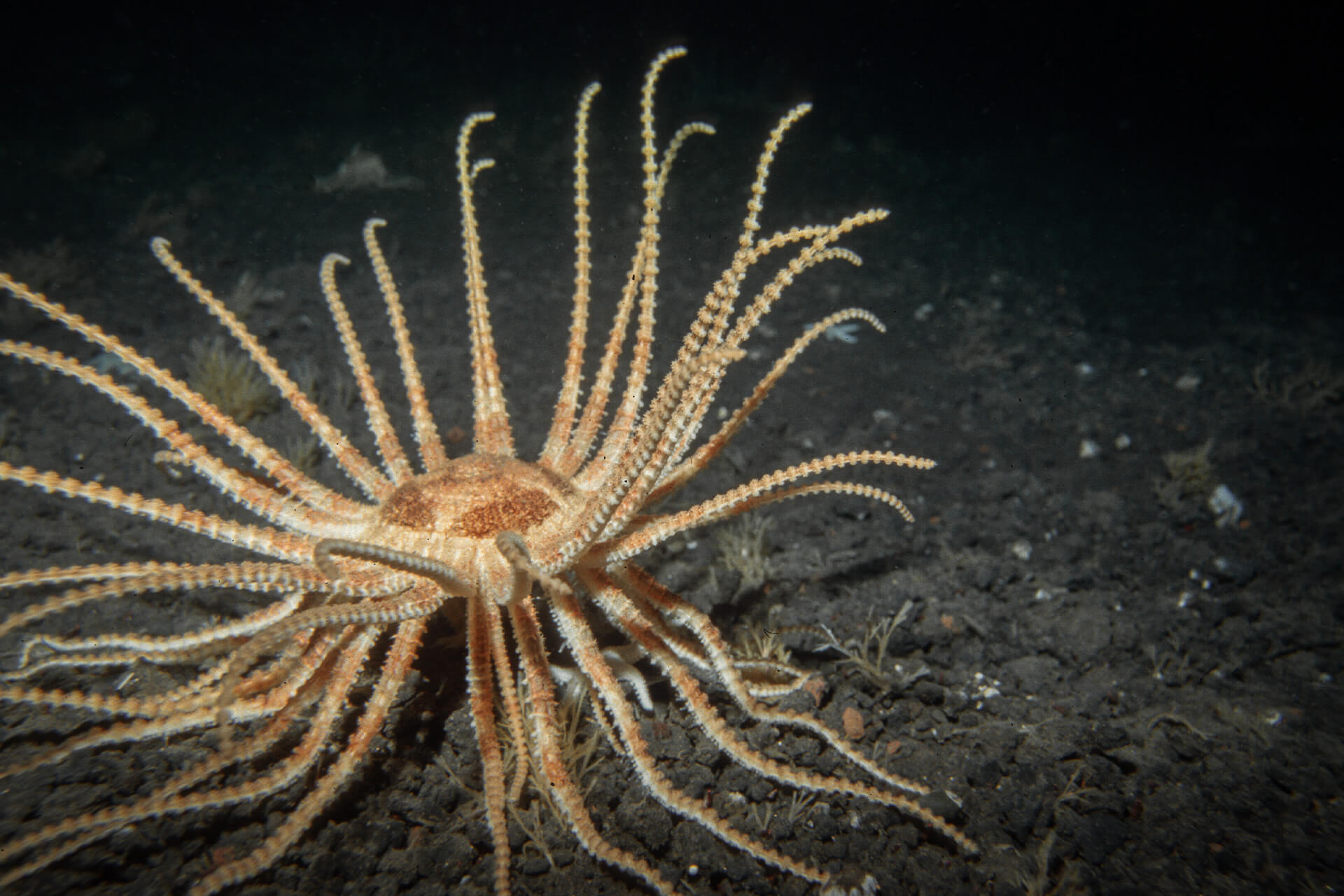
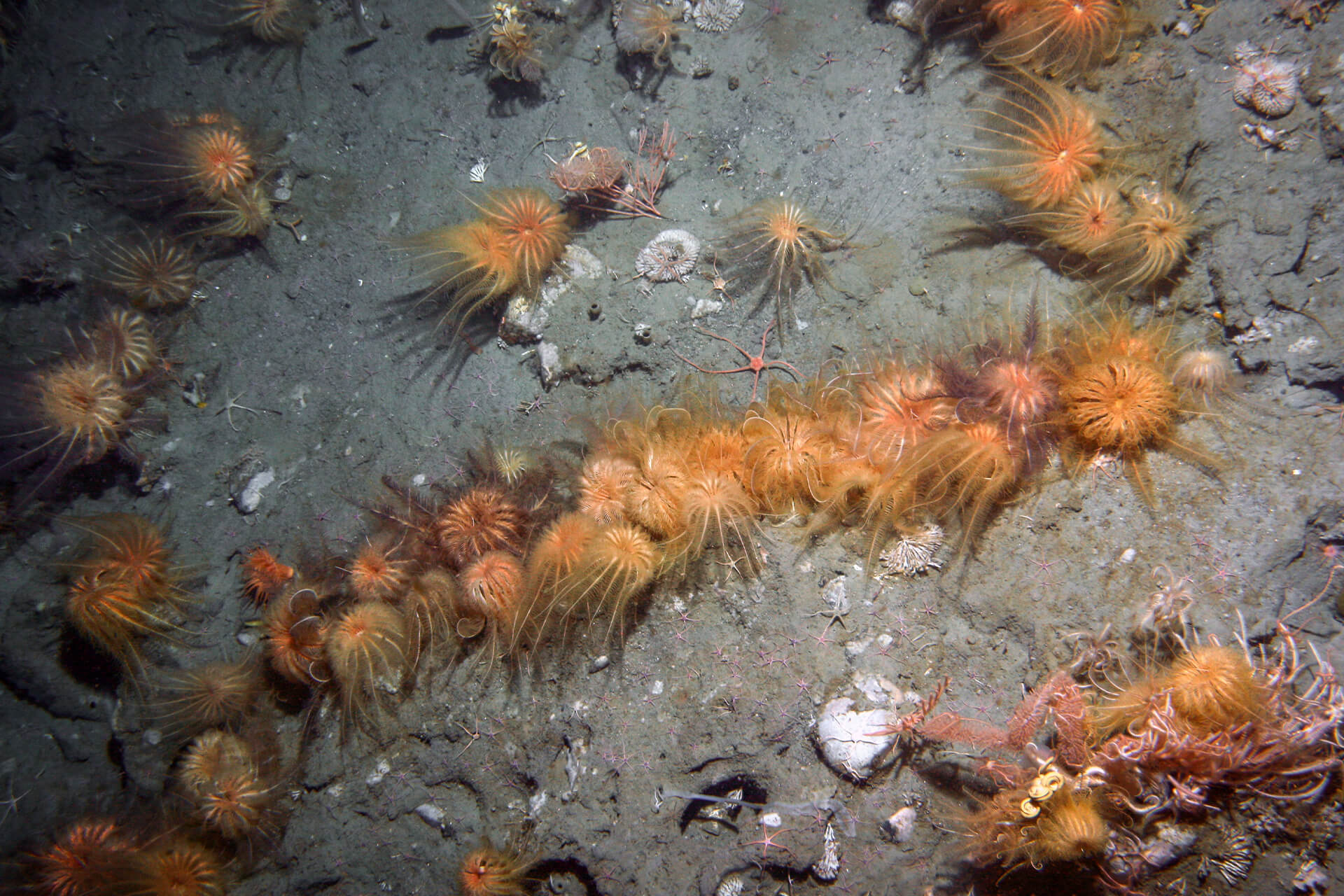
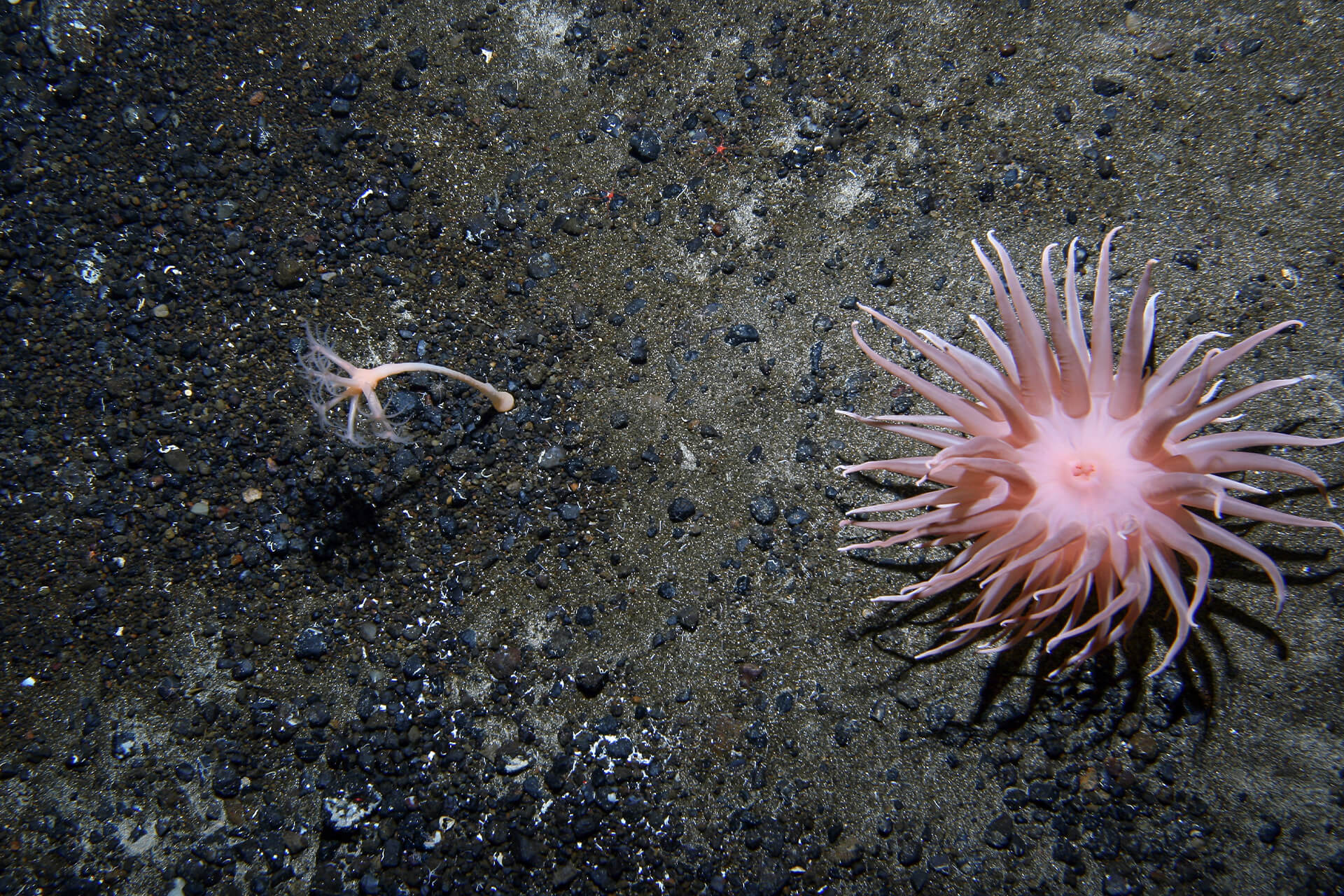
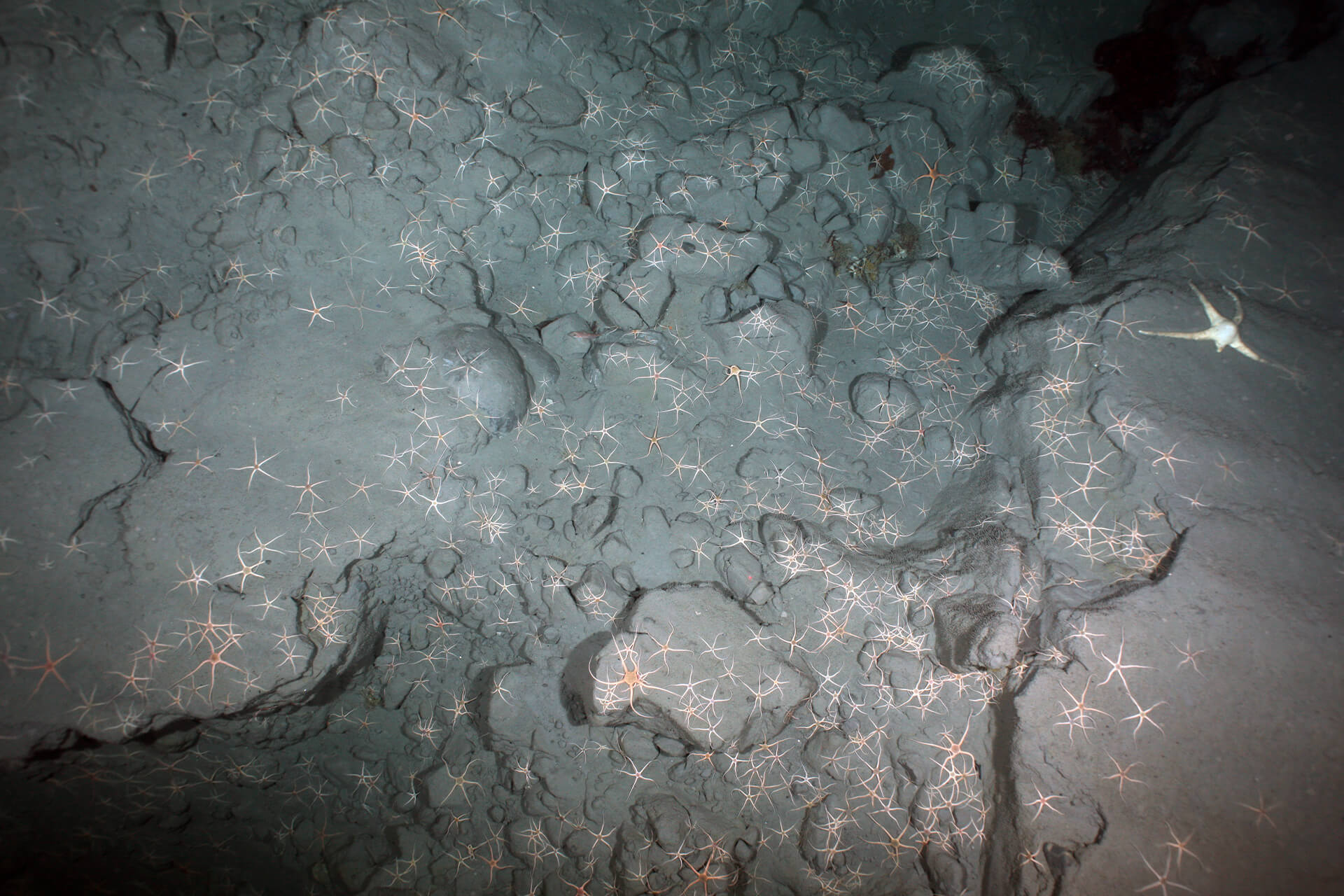
Sponges, corals, sea stars, bryozoans and many other invertebrates form complex benthic habitats across the continental shelf and slope. These communities provide shelter, feeding surfaces and attachment points for a wide range of marine life.
The shape of the seafloor plays an important role in determining where these ecosystems develop.
Currents interact with ridges, troughs and other seabed features, influencing where nutrients and organic matter accumulate, and creating a mosaic of habitats that foster seafloor diversity. In the cold, stable waters of the Antarctic shelf, many of these animals grow slowly, with some sponges and corals taking centuries to develop.
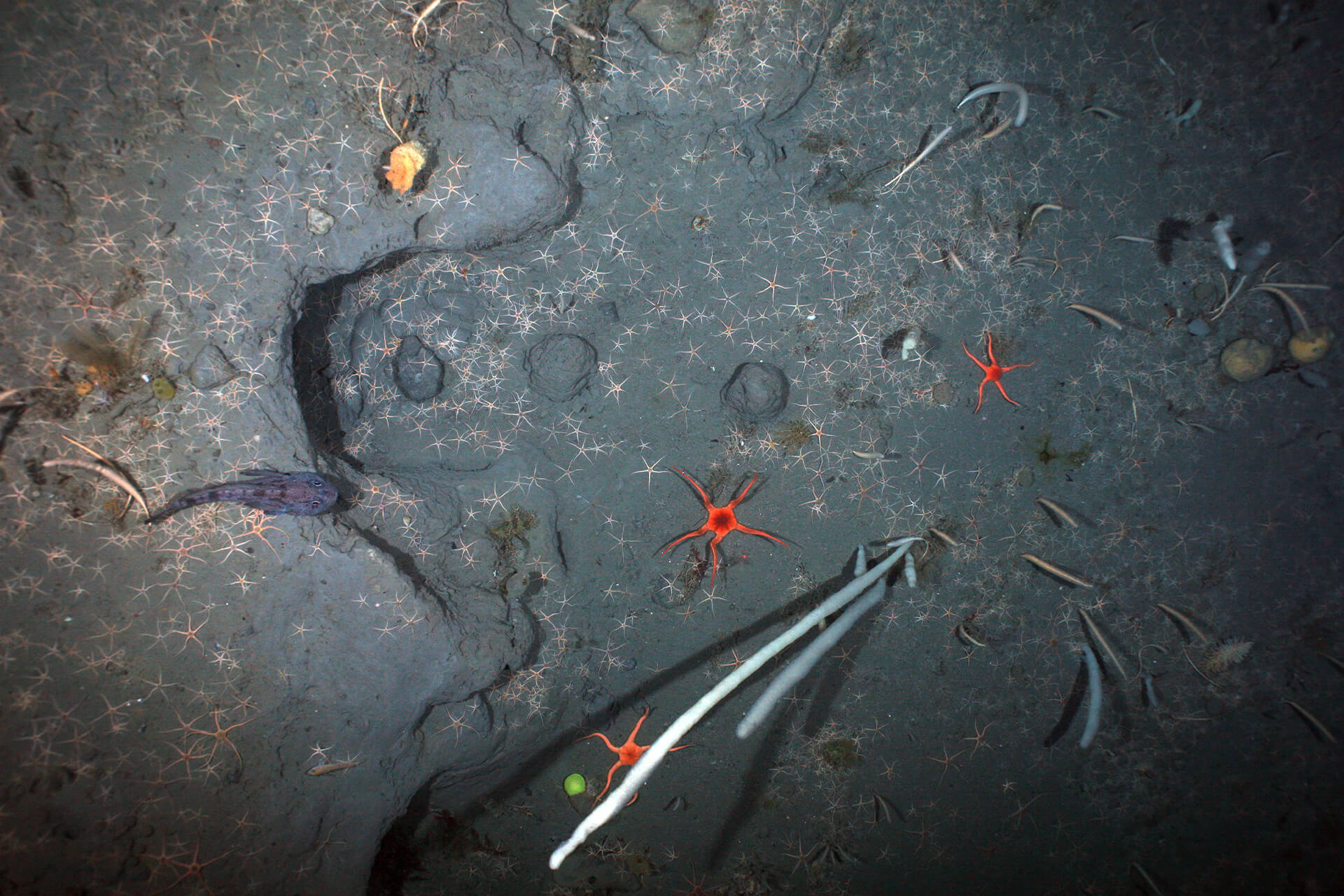
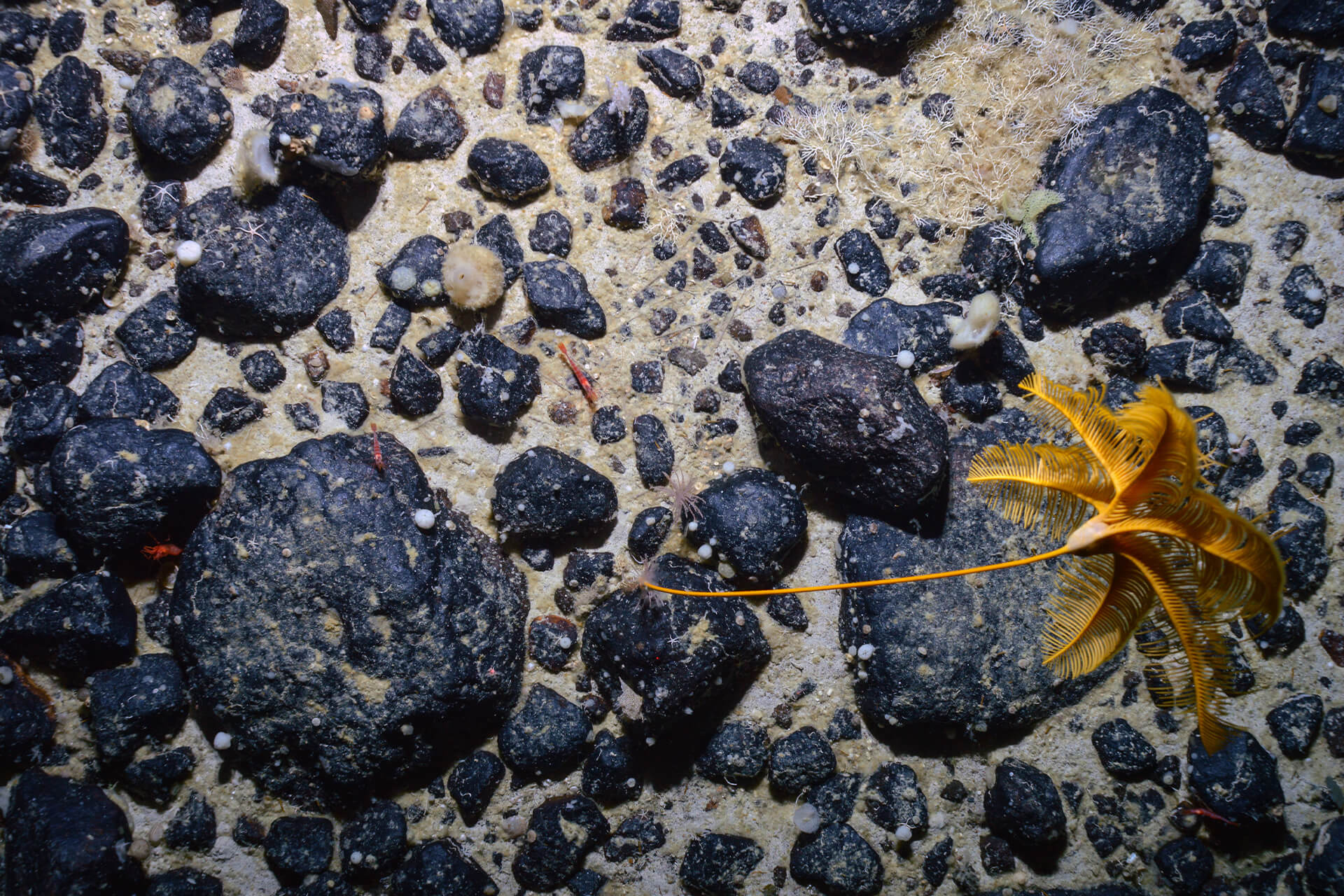
Much of the Antarctic continental shelf is blanketed by soft sediments, creating vast areas of homogenous seafloor habitat. Scattered within these environments are isolated rocks known as dropstones. These stones are transported by glaciers or icebergs and released to the seabed as the ice melts, sometimes far from their original source.
Although small, dropstones can play an important ecological role. They provide hard surfaces where organisms such as sponges, corals and bryozoans can attach and grow in places where suitable habitat is otherwise scarce. In doing so, they create small but significant islands of life within sediment-dominated seafloor landscapes, increasing habitat complexity and supporting local biodiversity.
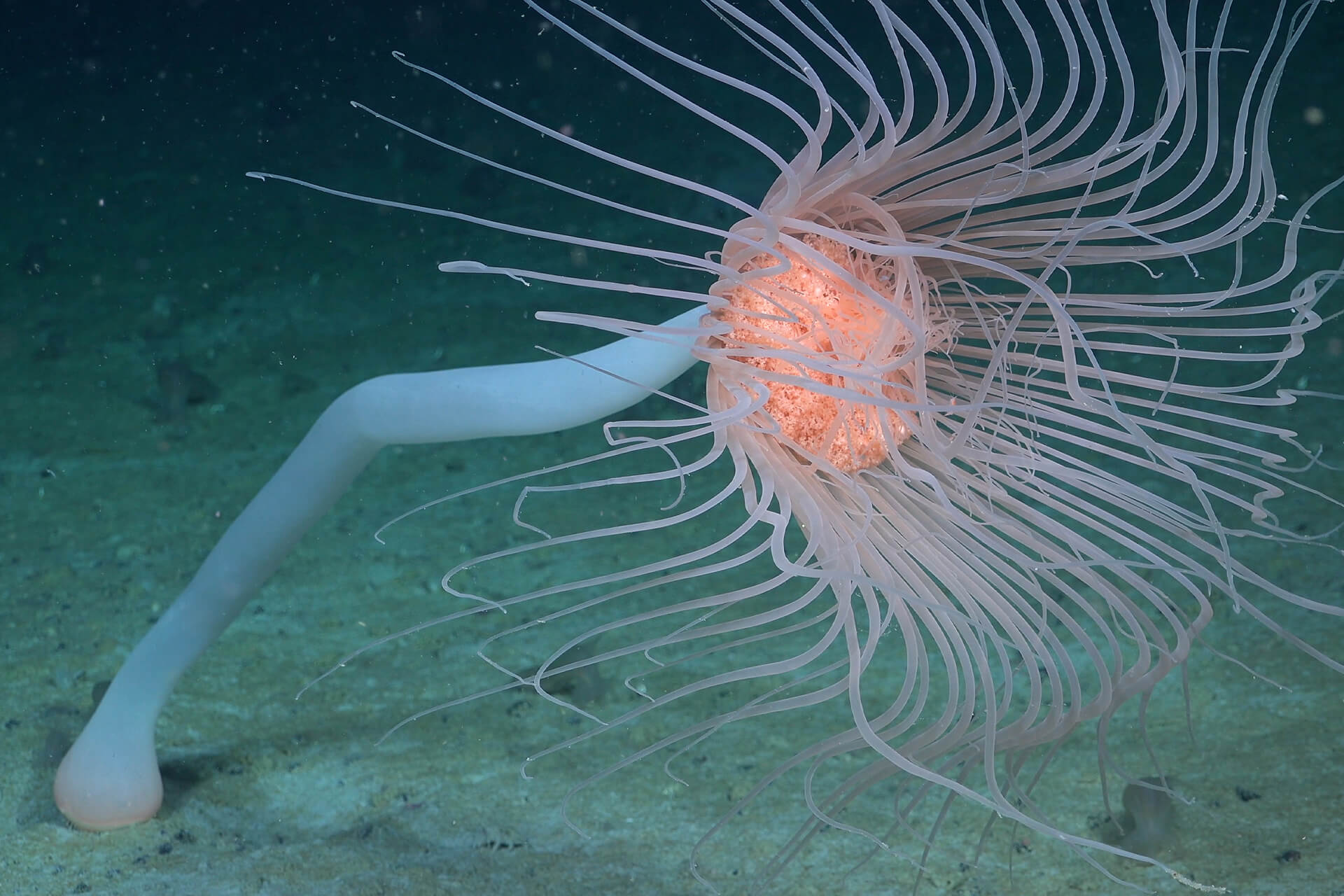
Beyond the continental shelf, the Antarctic seafloor descends into the deep Southern Ocean where cold, darkness, and immense pressure support highly specialised communities.
Far from the seasonal productivity of surface waters, life moves at a different pace. Many deep-sea organisms grow slowly, reproduce rarely, and may persist for decades or longer, making longevity and patience vital strategies in a world where food is scarce and unpredictable.
Antarctic deep-sea life remains very poorly understood. As scientists continue to explore deeper parts of the Southern Ocean, they are likely to encounter extraordinary ecosystems, unfamiliar ways of life, and forms of life stranger than we can even imagine.
CHOOSE YOUR PATH
Travel from the underside of Antarctic ice shelves to the abyssal plains thousands of metres below.
Learn how tectonics, glaciation and seafloor processes shaped Antarctica’s hidden landscape.
Head back to base and choose another path across the frozen continent.