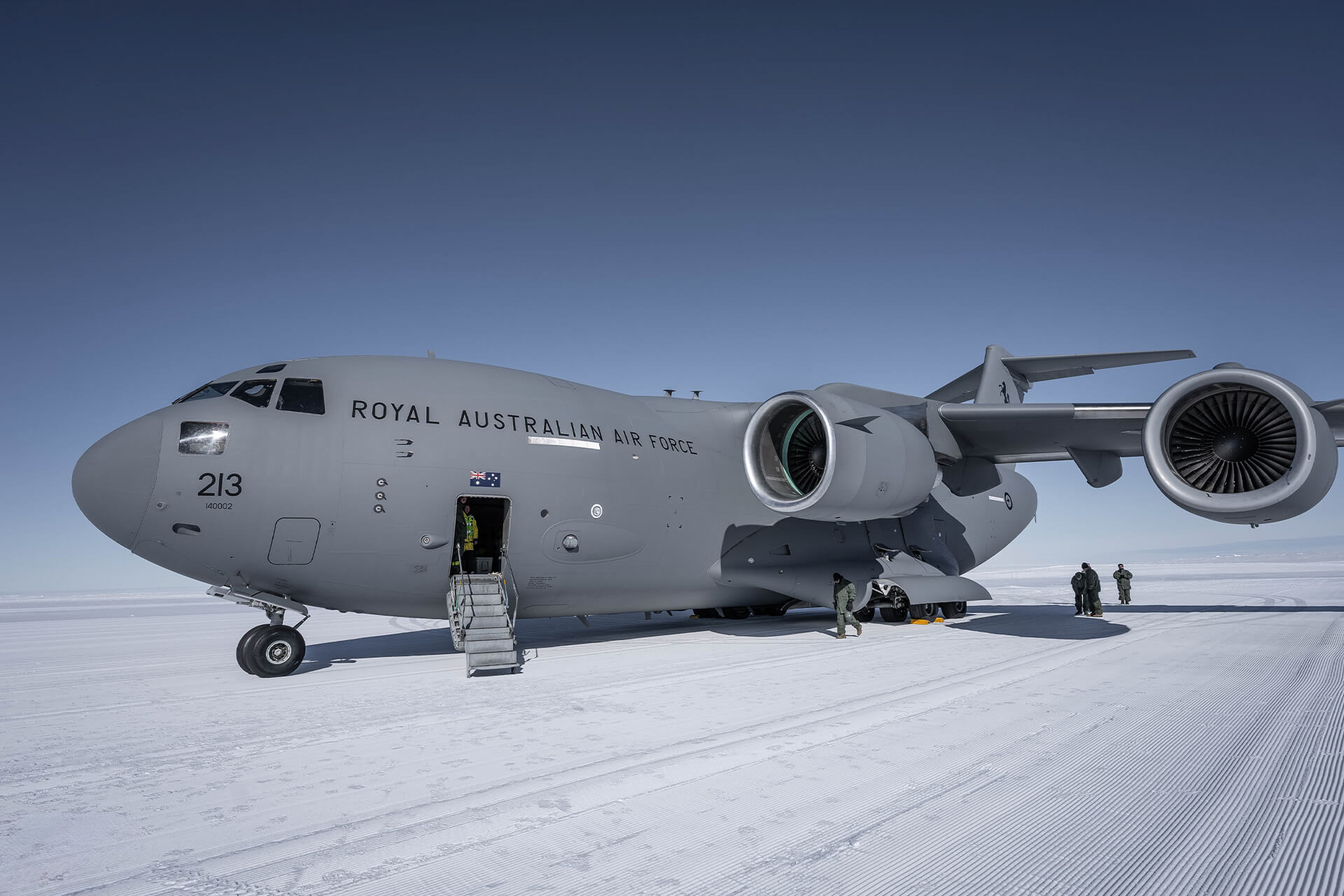
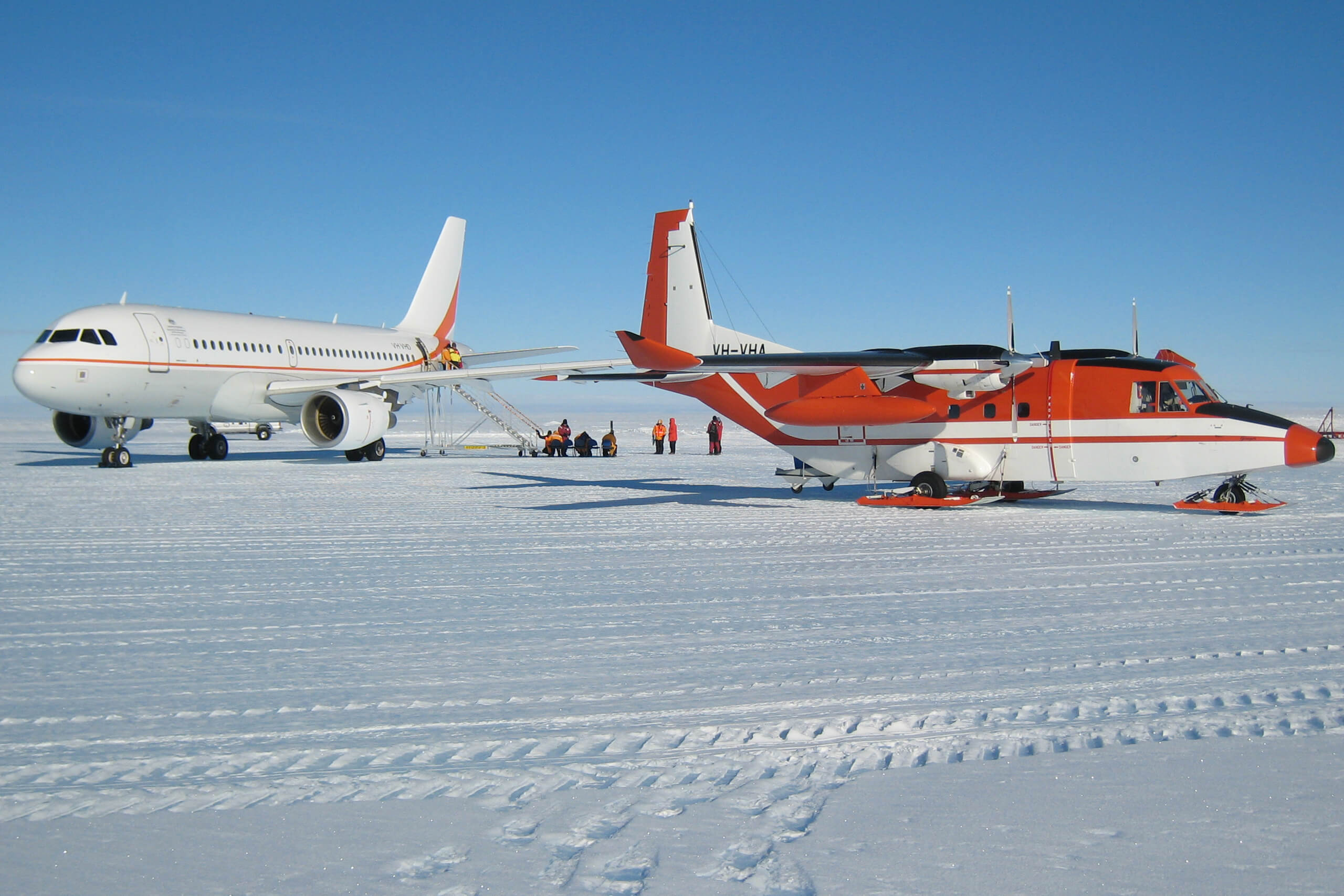
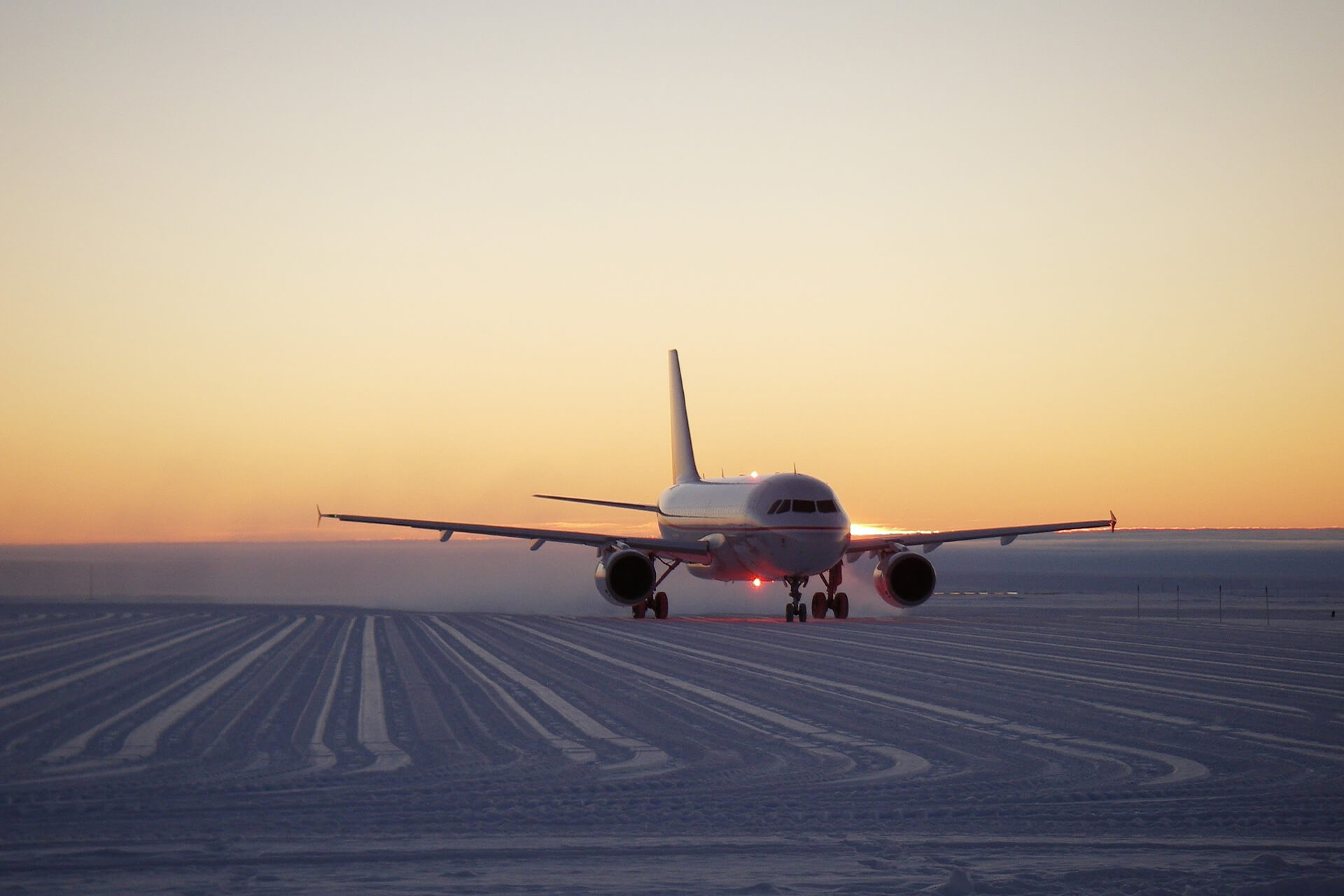
Passengers, cargo and scientific equipment are unloaded quickly onto exposed ice airfields with limited ground crews, infrastructure, and emergency support. Aircraft may remain running during unloading to reduce the risk of restart problems in extreme cold. In such a remote setting, a grounded aircraft is exceptionally difficult to repair, with limited engineering support, spare parts and recovery options.
While flight operations are carefully timed for favourable weather windows, a grounded aircraft is at serious risk on Antarctic ice airfields. Katabatic winds, formed by dense, freezing air draining downslope from the high Antarctic plateau, accelerate rapidly as they move toward the coast. If left unsecured on the ice, an aircraft can quickly be damaged by these powerful winds.